

Medical disclaimer: This blog is for general educational purposes and does not replace diagnosis or individualized medical advice. Treatment decisions should be made with a qualified healthcare professional based on your symptoms, medical history, medications, and other health factors.
Key Takeaways:
- A gout flare is a sudden episode of joint inflammation caused by urate crystals.
- The big toe is commonly affected, but gout can also occur in the ankle, knee, wrist, fingers, and other joints.
- Sudden severe pain, swelling, warmth, tenderness, and redness are common symptoms.
- There is no single natural remedy that instantly stops an attack.
- Medical treatment can include NSAIDs, colchicine, or corticosteroids, depending on individual circumstances.
- A hot, swollen joint with fever requires prompt medical assessment because infection can resemble gout.
Quick Answer:
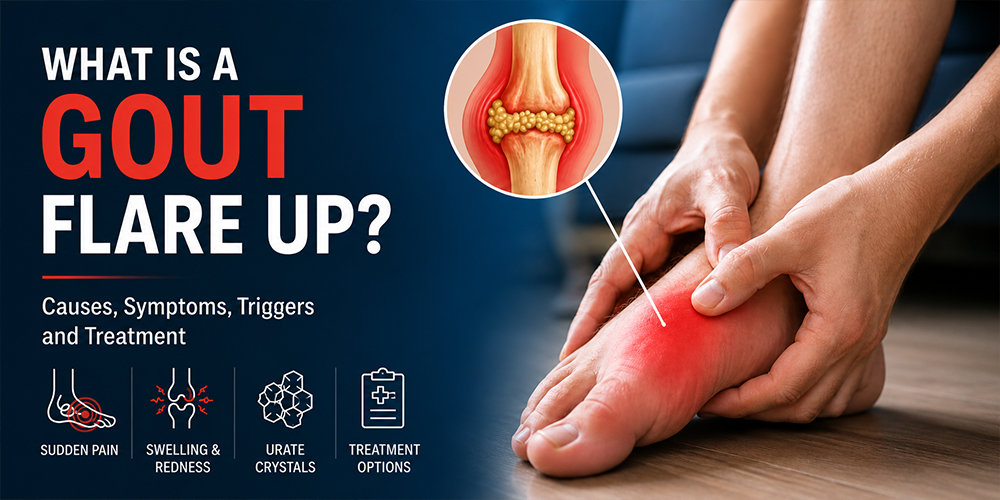
A gout flare up is a sudden episode of intense joint pain and inflammation caused by urate crystals irritating a joint. It often develops quickly, frequently at night, and can cause severe tenderness, swelling, warmth, and redness. The big toe is commonly affected, but gout can also occur in the ankle, knee, wrist, fingers, and other joints.
While certain foods, alcohol, dehydration, illness, medications, and other factors may contribute to flares, gout is fundamentally related to elevated uric acid and the formation of urate crystals in the joints.
What Is a Gout Flare Up?
A gout flare up is a period when urate crystals in a joint trigger an inflammatory response, resulting in sudden pain, swelling, warmth, and tenderness. The pain may become severe within hours and can make even light pressure on the joint uncomfortable.
Gout develops when uric acid levels become high enough for urate crystals to form. These crystals can settle in and around joints, where they trigger inflammation. A person may have no symptoms between attacks, a period sometimes referred to as intercritical gout.
What Does a Gout Flare Up Feel Like?
A gout flare can feel like sudden, severe, burning, or throbbing joint pain accompanied by swelling and extreme tenderness. The affected joint may feel hot and moving it can become difficult.
Common experiences include:
- Sudden pain that develops over several hours
- Severe tenderness around the joint
- Swelling and warmth
- Red or discoloured skin over the affected area
- Stiffness or reduced movement
- Pain that is particularly noticeable at night
- Lingering joint discomfort after the most intense pain subsides
The pain is often most intense during the first several hours. Afterward, discomfort can continue for days or even weeks.
What Are the Symptoms of a Gout Flare Up?
The most common symptoms of gout flare up include sudden joint pain, swelling, warmth, redness, tenderness, and difficulty moving the affected joint.
What Are the Signs of a Gout Flare Up?
Typical signs of gout flare up include:
- A joint that suddenly becomes painful and swollen
- Warmth around the joint
- Tenderness that can make touch or pressure uncomfortable
- Redness or visible skin changes
- Reduced range of motion
- Symptoms that develop suddenly, often during the night
Gout can affect the big toe most commonly, but it may also occur in the ankle, knee, elbow, wrist, or fingers.
What Does a Gout Flare Up Look Like?
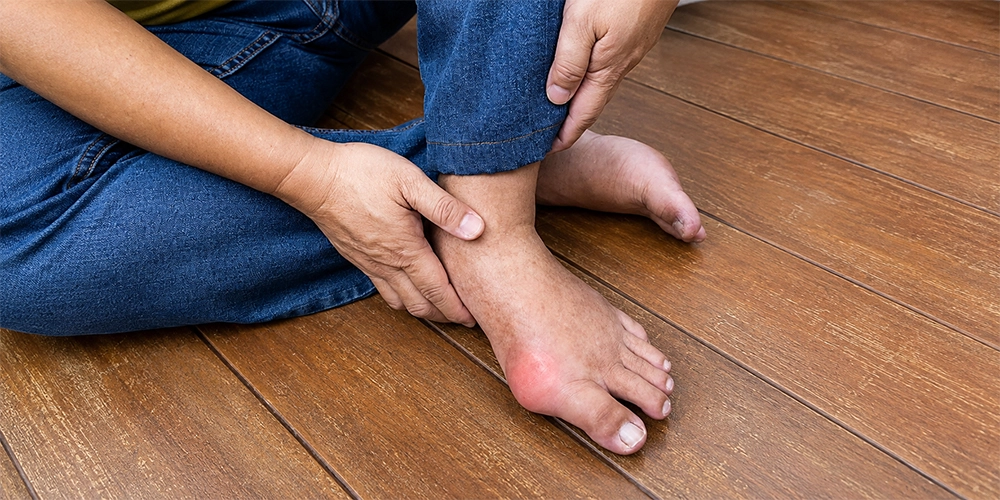
A swollen big toe is a classic presentation, but a gout flare in the ankle or another joint can look different. Because other forms of arthritis and joint infections can produce similar symptoms, a new or unusually severe attack should be medically evaluated.
What Causes Gout Flare Ups?
Gout flare-ups occur when urate crystals trigger inflammation inside a joint. Several factors can increase the likelihood of an attack or make symptoms worse. Common causes of gout flare-ups include high uric acid levels, which can result from the body producing too much uric acid or the kidneys not removing enough.
What Triggers Gout Flare Up?
Potential gout flare triggers include:
- Alcohol: Beer and other alcoholic beverages can increase gout risk, with beer particularly associated with increased risk.
- High-purine foods: Red meat, organ meats, and certain seafood can increase uric acid levels and may contribute to attacks.
- Sugary drinks: Beverages containing fructose, including some soft drinks, are associated with higher uric acid levels and gout risk.
- Dehydration: Not drinking enough fluids can be an issue for people managing gout, which is why adequate hydration is commonly recommended.
- Rapid changes in uric acid: Starting urate-lowering treatment can temporarily increase flare risk, which is why preventive anti-inflammatory treatment may sometimes be used when therapy begins.
- Certain medications: Some medicines, including certain diuretics and low-dose aspirin, can affect uric acid levels. Do not stop a prescribed medication without speaking with your healthcare professional.
- Injury or surgery: Recent trauma or surgery can sometimes trigger a gout attack.
- Weight and metabolic factors: Overweight and obesity are associated with a greater risk of gout and elevated uric acid.
- Family history: Having close family members with gout can increase your likelihood of developing it.
- Certain health conditions: kidney disease, diabetes, high blood pressure, metabolic syndrome, and cardiovascular conditions can be associated with increased gout risk.
- Stress and illness: Physical stress from illness or other changes in the body may coincide with flares in some people, although individual triggers vary.
Can Specific Foods and Drinks Trigger a Gout Flare?
Can Alcohol Cause Gout Flare Ups?
Alcohol can increase the risk of gout flare ups, particularly beer, because alcohol can contribute to higher uric acid levels and is associated with gout attacks.
If you notice that attacks repeatedly follow drinking, keeping a record of your symptoms.
Does Milk Cause Gout Flare Ups?
Milk is generally not considered a major gout trigger in the same way as alcohol, sugary drinks, organ meats, or certain seafood. Low-fat dairy can be included in many gout-friendly eating patterns.
Discuss recurring food-related symptoms with your healthcare professional.
Does Cheese Cause Gout Flare Ups?
Cheese is not typically classified among the major high-purine foods associated with gout attacks. The overall dietary pattern matters more than assuming every dairy product will trigger a flare.
Does Sugar Cause Gout Flare Ups?
Sugar, particularly fructose-containing sweeteners and sugary drinks, can contribute to higher uric acid levels and increased gout risk.
This is why limiting sugar-sweetened beverages and products containing high-fructose corn syrup may be recommended as part of gout management.
Does Chicken Cause Gout Flare Ups?
Chicken contains purines, but it is generally considered a moderate-purine food rather than being in the same category as organ meats.
If chicken repeatedly precedes your symptoms, discuss your diet with a healthcare professional rather than eliminating foods unnecessarily.
Is Salmon Bad for Gout Flare Up?
Salmon also contains purines and may increase uric acid, but seafood does not necessarily need to be eliminated from everyone’s diet. The Arthritis Foundation notes that the potential cardiovascular benefits of eating salmon in moderation may outweigh the gout risk for some people.
Does Soda Cause Gout Flare Up?
Sugary soda can contribute to gout risk because many soft drinks contain fructose or other added sugars that can increase uric acid levels.
Replacing sugary soda with water or another unsweetened beverage can be a practical dietary change for people managing gout.
Does Watermelon Cause Gout Flare Ups?
Watermelon is not generally considered a high-purine food. However, it contains naturally occurring sugars, including fructose, so large amounts of fruit or fruit juice may contribute to overall fructose intake.
Can Exercise Cause Gout Flare Up?
Exercise itself is not a universal trigger for gout, and regular physical activity is generally encouraged for overall health and healthy weight management.
However, strenuous activity, joint injury, or dehydration around exercise may be relevant for some individuals. During an active flare, it is usually sensible to avoid putting unnecessary stress on the painful joint and follow individualized medical advice.
Acute Gout Flare Clinical Trials
Explore active clinical trials for fast relief from acute gout flare pain
How Severe Can a Gout Flare Up Be?
People usually ask, what is severe gout flare up? And can it cause intense pain, substantial swelling, warmth, tenderness, and difficulty moving or using the affected joint?
Pain is often most intense during the early part of an attack. Repeated or untreated gout can also contribute to recurrent attacks, joint damage, tophi, and urate-related kidney stones over time.
This does not mean every painful joint is gout. A hot, swollen joint accompanied by fever can indicate an infection and requires prompt medical evaluation.
Is Gout Flare Dangerous?
A gout flare can be extremely painful, but the greater concern is recurrent or poorly controlled gout. Over time, untreated gout may contribute to joint damage, tophi, and kidney stones.
A sudden hot and swollen joint with fever should not automatically be assumed to be gout because joint infection can cause similar symptoms and needs urgent medical attention.
How Long Does a Gout Flare Up Last?
The most severe gout pain often peaks during the first several hours, while remaining joint discomfort can continue for several days or weeks. The duration varies between individuals and attacks.
If attacks are becoming more frequent, lasting longer, or affecting more joints, medical evaluation can help determine whether your gout needs additional long-term management.
For more information, see our guide to how long gout pain lasts.
How to Treat Gout Flare Up?
Treatment for an acute gout attack generally focuses on reducing inflammation and controlling pain. Common medical treatments include NSAIDs, colchicine, or corticosteroids, depending on the individual’s health, medications, and other factors.
Learn more about gout pain relief.
How to Reverse Gout Flare Up?
You cannot reliably reverse a gout flare up instantly, but early treatment may help control the inflammation and shorten the period of severe symptoms.
Depending on your medical situation, a healthcare professional may recommend:
- An appropriate anti-inflammatory medication
- Colchicine, which works best when started early in an attack
- Corticosteroids when appropriate
- Resting the painful joint
- Staying adequately hydrated
- Avoiding alcohol and high-fructose drinks
- Temporarily limiting foods that are high in purines
Colchicine, NSAIDs, and corticosteroids all have potential risks and may not be appropriate for everyone. Your healthcare professional should determine which treatment is safest for you.
Long-term gout management is different from treating an individual attack. Urate-lowering medications may be recommended for some people with recurrent or complicated gout, with treatment generally aiming to maintain an appropriate serum urate level.
What Is a Natural Remedy for a Gout Flare Up?
There is no single natural remedy proven to immediately stop a gout attack. Supportive measures such as drinking enough water, resting the affected joint, and avoiding alcohol and high-fructose beverages may complement medical treatment.
Some people also ask about cherries or tart cherry products. Research has explored their potential relationship with gout attacks, but they should not be viewed as a replacement for prescribed gout treatment.
If you are considering supplements or herbal products, discuss them with your healthcare professional because they can interact with medications or may not be appropriate for certain medical conditions.
When to See a Doctor for a Gout Flare?
You should contact a healthcare professional for sudden, intense joint pain, particularly if you have never been diagnosed with gout before. A hot, swollen joint accompanied by fever requires prompt medical attention because infection can produce similar symptoms.
Professional evaluation can also be important when:
- Flares are becoming more frequent
- Pain is severe or does not improve
- Several joints are affected
- You develop lumps that may represent tophi
- You have kidney stones or kidney problems
- Current treatment is no longer controlling your symptoms
- You are uncertain whether your symptoms are gout
Diagnosis may involve a medical history, physical examination, blood testing, and, when appropriate, examination of joint fluid for urate crystals. A blood uric acid result alone does not always confirm or exclude gout.
What to Eat During a Gout Flare Up?
During a flare, focus on balanced meals, adequate hydration, and limiting foods and drinks associated with increased uric acid. Water, vegetables, appropriate portions of lower-purine proteins, and low-fat dairy can fit into a balanced eating pattern.
Consider limiting:
- Alcohol, especially beer
- Sugary soft drinks and other high-fructose beverages
- Organ meats
- Large portions of red meat
- Certain high-purine seafood
- Excessively large meals
Diet alone may not adequately control gout for everyone. Medication and long-term urate management may also be necessary.
What Is Intercritical Gout?
Intercritical gout is the symptom-free period between gout attacks. A person may feel completely well during this stage even though urate crystals may remain present in the body.
Because symptoms can disappear between attacks, people may assume that gout has gone away. However, recurrent attacks can occur without appropriate long-term management.
How Can Gout Be Managed Between Flares?
Managing gout between attacks can help reduce the likelihood of future problems. Depending on your individual situation, treatment may include urate-lowering medication, dietary adjustments, physical activity, weight management, and monitoring of serum urate levels.
The goal is not simply to get through each attack. For people who need long-term treatment, controlling uric acid can help reduce the formation of additional urate crystals and the complications associated with recurrent gout.
For additional information, explore What Is Gout and our guide to the stages of gout.
Can Gout Be Treated Through Clinical Research?
Clinical research continues to evaluate approaches for conditions affecting the joints and immune system, including gout. People interested in research opportunities can explore clinical studies in Louisiana, acute gout flare clinical trial opportunities, and clinical trials for rheumatology to learn whether any studies may be appropriate for them.
Clinical trial participation depends on the study’s eligibility requirements, location, recruitment status, and medical criteria. A research professional can explain the study and its requirements before someone decides whether to participate.
For research sites, clinical trial patient recruitment helps connect eligible individuals with studies that may be relevant to their condition.
Final Thoughts
Knowing what a gout flare is up makes it easier to recognize the sudden pain, swelling, warmth, and tenderness associated with an attack. Gout is linked to urate crystal formation, which occurs when uric acid builds up in the body. Dietary factors such as alcohol, high-purine foods, and fructose-containing drinks can influence risk, but gout is not caused by diet alone.
If attacks are recurrent, severe, or interfering with daily activities, speak with a healthcare professional about both immediate treatment and long-term gout management. Early evaluation is especially important when a joint is hot and swollen with fever because infection can require urgent treatment.
Acute Gout Flare Clinical Trials
Explore active clinical trials for fast relief from acute gout flare pain
FAQs
What Does a Gout Flare Up Look Like?
It often appears as a suddenly swollen, warm, tender, and inflamed joint. The big toe is commonly affected, but the ankle, knee, wrist, fingers, and other joints can also be involved.
Can Stress Cause a Gout Flare Up?
Stress may coincide with gout symptoms for some people, but it is not as clearly established a dietary trigger as alcohol, fructose-containing beverages, or certain high-purine foods. Illness, changes in routine, dehydration, and other physical stressors can occur alongside an attack.
How Long Does Gout Pain Last?
The most intense pain commonly occurs early in an attack, while residual discomfort can last for days or weeks. Later attacks may last longer or involve more joints.
Can Gout Affect the Ankle?
Gout can affect the ankle as well as the big toe, knee, elbow, wrist, and fingers. A swollen, painful ankle can have several possible causes, so proper evaluation is important when the diagnosis is uncertain.
Can Peanuts Cause Gout Flare Up?
Peanuts are not generally classified among the major high-purine foods most strongly associated with gout. Individual dietary responses can vary, so if you repeatedly notice symptoms after eating a particular food, discuss the pattern with your healthcare professional.
How Long After Eating Red Meat Does Gout Flare Up?
There is no reliable universal timeframe between eating red meat and developing a gout attack. A flare can result from multiple factors, and symptoms do not necessarily begin immediately after a specific meal. Red meat is a recognized dietary source associated with higher gout risk, so moderation may be appropriate for people with gout.