

Quick Answer
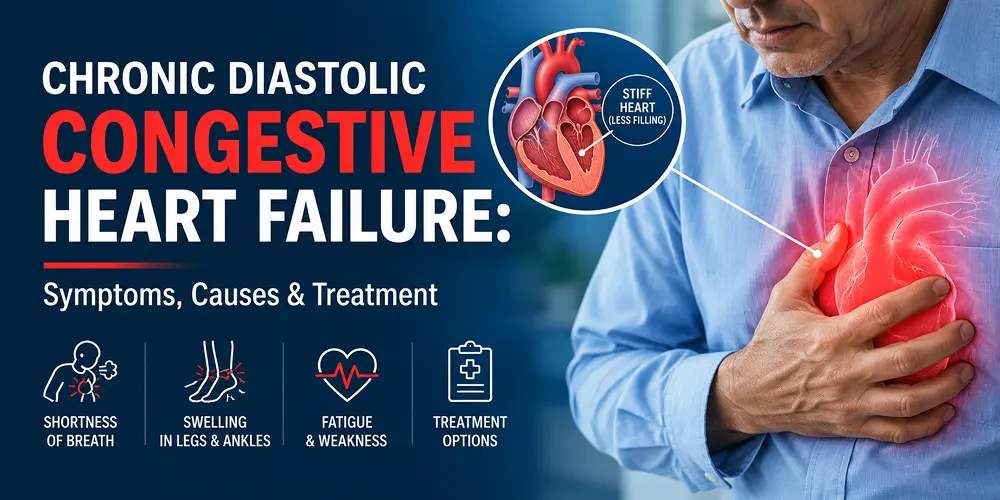
What is chronic diastolic congestive heart failure? It is a long-term condition in which the heart squeezes normally but becomes too stiff to fill properly between beats. This can increase pressure inside the heart and cause fluid to build up in the lungs and other parts of the body. Doctors commonly refer to this form as heart failure with preserved ejection fraction (HFpEF).
With chronic diastolic CHF, the heart muscle becomes stiff and has trouble filling with enough blood. This type of heart failure, often called heart failure with preserved ejection fraction (HFpEF), can be difficult to recognize at first because its symptoms may seem like normal signs of aging or being out of shape.
So, what is chronic diastolic congestive heart failure? This guide explains the condition and shows how research is reshaping its care.
Key Takeaways
- The heart pumps normally but fills poorly because the ventricle has stiffened.
- Breathlessness, swelling, and fatigue are the most common warning signs.
- High blood pressure, older age, obesity, diabetes, and other conditions can increase the risk.
- Clinical trials have expanded the treatment options available for HFpEF.
- Early diagnosis and ongoing follow-up can help manage symptoms and reduce complications.
Medical Disclaimer
This article is for educational purposes only and does not replace professional medical advice, diagnosis, or treatment. Consult a qualified healthcare provider about your health.
What Is Chronic Diastolic Congestive Heart Failure?
Chronic diastolic congestive heart failure occurs when the left ventricle becomes too stiff to relax and fill normally between heartbeats. As a result, pressure can build behind it and travel back toward the lungs.
The name itself describes several parts of the condition:
- Chronic means the condition is persistent or long-standing.
- Diastolic refers to the part of each heartbeat when the heart relaxes and fills with blood.
- Congestive refers to fluid buildup that can occur when heart failure causes pressure to rise.
You may also see this condition called heart failure with preserved ejection fraction (HFpEF). HFpEF is the broader clinical term and refers to heart failure in which the ejection fraction remains preserved. The ejection fraction is generally 50% or higher in HFpEF. This number tells doctors how much blood the left ventricle pushes out with each contraction.
Understanding what chronic diastolic congestive heart failure means also helps distinguish it from systolic heart failure, in which the heart has reduced pumping function.

What Are the Symptoms of Chronic Diastolic CHF?
Breathlessness or tiredness can seem ordinary at first, especially when they appear during exercise or daily activities. That can make the early signs easy to overlook.
Signs of chronic diastolic heart failure include:
- Breathlessness during routine tasks, such as climbing stairs or walking uphill.
- Unusual fatigue and reduced stamina.
- Swelling in the ankles, feet, or lower legs.
- Shortness of breath when lying flat or waking up at night due to breathlessness.
- Rapid weight gain of more than 3 pounds in a day or 5 pounds in a week.
- A persistent cough or wheezing, particularly when lying down.
Severe or sudden shortness of breath, chest pain, or fainting warrants immediate medical attention.
What Causes Chronic Diastolic CHF?
Any condition or factor that increases pressure on the heart or damages its muscle over time can stiffen the ventricle. This can lead to diastolic dysfunction, making it harder for the ventricle to relax and fill.
Common contributors include:
- High blood pressure: the heart must pump blood against greater resistance, thickening the heart muscle over time.
- Age: the heart can become less flexible with age.
- Diabetes and obesity: both are associated with metabolic changes and inflammation that can contribute to changes in heart structure and function.
- Atrial fibrillation, coronary artery disease, and kidney disease: these conditions can increase cardiovascular strain and are associated with a higher risk of HFpEF.
Less common causes include conditions such as cardiac amyloidosis and hypertrophic cardiomyopathy, which can directly affect the heart muscle and its ability to relax. HFpEF also occurs more often in women than in men.
What Are the Stages of Diastolic Heart Failure?
Doctors use four ACC/AHA stages, labeled A through D, to describe how heart failure progresses from risk factors to advanced disease. These stages of diastolic heart failure apply to heart failure broadly and reflect increasing disease burden, although a person’s condition does not necessarily move through every stage in a fixed sequence.
Stage A
Risk factors for heart failure are present, but there is no current evidence of structural heart disease or heart failure symptoms.
Stage B
Structural heart disease or other evidence of increased risk is present, but the person has no signs of heart failure.
Stage C
Structural heart disease is present, and the person has current or previous symptoms of heart failure.
Stage D
Advanced heart failure causes severe symptoms or significant limitations despite treatment and requires specialized care.
How Is Chronic CHF with Diastolic Dysfunction Diagnosed and Treated?
Diagnosing congestive heart failure can require several pieces of evidence because symptoms such as breathlessness and fatigue have many possible causes.
How Is It Diagnosed?
Diagnosis starts with medical history and physical examination. Blood tests for BNP or NT-proBNP can support the diagnosis by showing increased pressure or stress on the heart. Its levels may be lower than expected in people with obesity, so doctors interpret the results alongside other findings.
An echocardiogram measures ejection fraction and can show structural or functional changes associated with HFpEF. Doctors combine these findings with symptoms and other tests to determine whether HFpEF is present.
How Is It Treated?
Unlike acute heart failure, which develops or worsens suddenly, chronic heart failure persists over time and may remain stable with treatment. Treatment aims to ease symptoms and control the conditions that contribute to it.
- Diuretics help remove excess fluid and can relieve symptoms due to congestion.
- SGLT2 inhibitors can reduce the risk of worsening heart failure and hospitalization.
- Managing underlying conditions can reduce factors that place additional stress.
- Depending on the person’s condition, clinicians may recommend moderating sodium intake and staying physically active through an appropriate exercise program.
How Does Diastolic Heart Failure Differ from Other Types?
Heart failure can develop for different reasons. Two common patterns are heart failure with preserved ejection fraction (HFpEF) and heart failure with reduced ejection fraction (HFrEF).
The two patterns can also affect each other. Pressure can build up in the lungs and place extra strain on the right side of the heart. When right-sided heart failure develops, fluid may collect in the legs, ankles, or abdomen.
Why Do Clinical Trials Matter in Chronic Diastolic Heart Failure?
Clinical trials help doctors understand which treatments may work best for people with HFpEF. For example, the EMPEROR-Preserved and DELIVER trials helped establish SGLT2 inhibitors as an important treatment option by showing a lower risk of worsening heart failure and hospitalization.
For some patients, a clinical trial may also provide an opportunity to access a treatment being studied for heart failure.
If you’re interested in learning what studies may be available, Heart Failure Clinical Trials and Cardiovascular Clinical Trials can help you explore relevant research. Talk with your healthcare provider before deciding if a clinical trial is right for you.
Final Remarks
Chronic diastolic CHF requires ongoing care, but understanding the condition can help you recognize changes and stay on top of treatment. Keep track of new or worsening symptoms and attend regular cardiology appointments, so your care team can adjust treatment when needed.
And if you or a loved one is considering research participation, NRA Clinical, a Trusted CRO in Louisiana, can help you understand whether you may meet the eligibility requirements for a current study.
FAQs About Chronic Diastolic Congestive Heart Failure
What is the difference between congestive heart failure and chronic heart failure?
“Chronic” describes how long heart failure has been present. “Congestive” refers to fluid buildup that can occur when the heart cannot keep up with the body’s needs. A person can have chronic heart failure without obvious congestion at a given time, especially when treatment is controlling fluid levels.
What is the life expectancy of diastolic heart failure?
Life expectancy with diastolic heart failure varies considerably. HFpEF is a serious chronic condition, but treatment and management of contributing conditions can improve symptoms and reduce the risk of hospitalization. A person’s cardiologist is best positioned to discuss individual prognosis.
Is chronic diastolic congestive heart failure the same as HFpEF?
Chronic diastolic heart failure is often used to describe HFpEF, particularly when impaired relaxation or filling contributes to the condition. However, HFpEF is a broader clinical diagnosis that involves heart failure symptoms or signs alongside a preserved ejection fraction.
How is chronic diastolic congestive heart failure diagnosed?
Doctors combine symptoms, medical history, examination findings, blood tests, and echocardiography when evaluating possible HFpEF. When the diagnosis remains uncertain, tools such as the H2FPEF score can estimate the likelihood of HFpEF. Exercise testing or measurement of pressures inside the heart may be considered when noninvasive tests do not provide a clear answer.
How is chronic diastolic congestive heart failure treated?
Treatment is personalized and led by a cardiologist. For people living with obesity, supervised weight management can ease symptoms and improve exercise tolerance. Managing each patient’s underlying conditions remains as important as any single medication.