

Quick Answer
Alcohol is one possible trigger among several causes of gout. Some people drink regularly and never develop symptoms, whereas others notice a flare after a single evening out. Genetics, kidney function, diet, and existing uric acid levels play a role.
This guide covers the alcohol and gout connection, which drinks carry the most risk, how much quantity becomes a contributing factor, and what to do if alcohol triggers a flare.
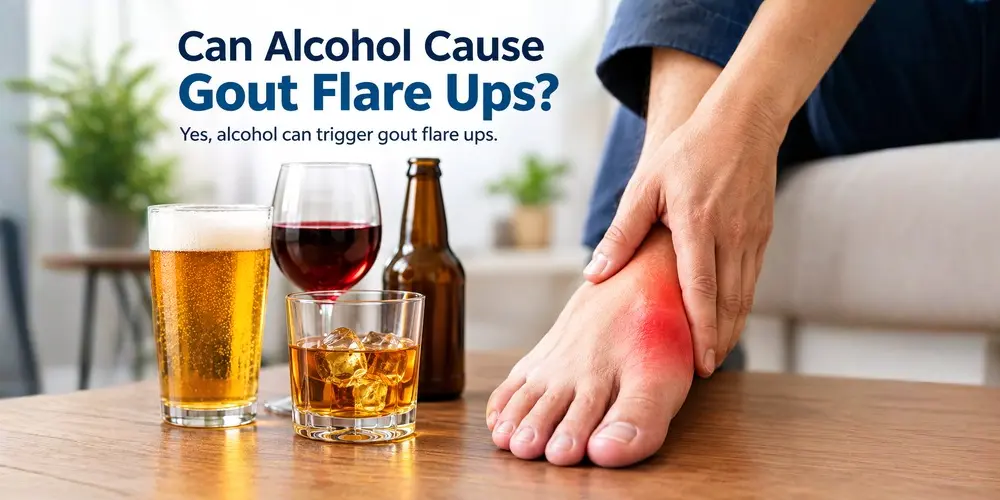
Yes, alcohol can trigger a flare or raise your overall risk of one. The alcohol and gout connection comes down to how alcohol changes the way your body produces and clears uric acid, the compound behind every gout attack.
Key Takeaways
- Alcohol can raise the likelihood of a gout flare, even at moderate intake.
- Higher alcohol intake is generally linked to higher flare risk.
- Beer, wine, and spirits each carry a different risk profile, and none is automatically safe for someone with gout.
- Cutting back on alcohol may help if you’ve noticed it as a personal trigger.
- Frequent or severe flares should be evaluated by a healthcare provider rather than managed through diet changes alone.
Medical Disclaimer: This article is for general educational purposes and does not replace diagnosis or personalized medical advice. It’s always better to speak with a healthcare provider about your individual risk factors and treatment options for gout.
Does Alcohol Trigger Gout Flare Up?
Alcohol raises uric acid levels in two ways at once.
- Increases how much uric acid your body produces
- Interferes with how efficiently your kidneys remove that uric acid
The buildup can form sharp crystals in joint tissue, most often in the big toe, which trigger the inflammation and pain of a flare.
When your liver metabolizes alcohol, it produces lactate as a byproduct. Lactate and uric acid compete for the same pathways in the kidneys during filtration, and when lactate levels rise, less uric acid gets filtered out and more stays in circulation.
Alcohol’s dehydrating effect concentrates uric acid further and makes crystal formation more likely.
This explains what triggers gout flare up symptoms after drinking alcohol even when you haven’t changed anything else about your diet. The mechanism doesn’t guarantee a flare after every drink, but it raises the odds, particularly for people who already have higher uric acid levels or have experienced gout before.
Recognizing early symptoms of gout flare up is important since knowing what a gout flare up feels like, such as sudden joint warmth, swelling, or tenderness, can help you relieve gout pain before it becomes severe.
Which Alcohol Is Worst for Gout Flare?
Not all alcoholic drinks affect uric acid the same way. Beer generally carries the highest risk because it combines alcohol with purines, compounds that break down directly into uric acid during digestion.
Wine and spirits contain fewer purines but still raise uric acid through alcohol’s effect on kidney filtration.
When you’re trying to figure out gout and alcohol what to drink, it helps to reframe the debate between best and worst alcohol for gout. There isn’t a version of alcohol that’s fully safe for someone managing gout. Calling one option the “best” alcohol for gout means it carries a comparatively lower purine load, not that it’s risk-free.
So, the safer approach is reducing total alcohol intake rather than swapping beer for wine and assuming the risk disappears.
How Much Alcohol Increases the Risk?
Research on gout and alcohol consumption points to a dose-response pattern. The more alcohol consumed, the higher the likelihood of triggering a flare. This risk also tends to show up within about 24 hours of drinking; thus, someone who has a few drinks at dinner may notice symptoms of gout flare up the following morning.
There isn’t a universal number of drinks that guarantees a flare, since baseline uric acid levels, hydration, kidney function, and medication use all shift the threshold for each person. What research does support consistently is that even moderate drinking can trigger flares in people prone to gout.
What Should You Do If Alcohol Triggers a Gout Flare?
Whenever you notice a flare developing after drinking alcohol, a few steps can help manage the immediate discomfort and reduce the odds of it worsening.
- Stop drinking alcohol until the flare resolves.
- Drink water consistently to support kidney function and help flush uric acid.
- Rest and elevate the affected joint to reduce swelling
- Follow any treatment plan already prescribed by your doctor
- Avoid relying only on home remedies if pain is severe or lasts more than a few days
- Track what you drank and how soon symptoms appeared, since this pattern can help a doctor identify your triggers
These steps support how to treat gout flare up symptoms in the short term, but they’re not a substitute for medical care if flares keep recurring.
Understanding how long a gout flare lasts, or how long does it take a gout flare up to go away once treatment starts, can help you gauge whether your symptoms are following a typical course.
Acute Gout Flare Clinical Trials
Explore active clinical trials for fast relief from acute gout flare pain
Can Stopping Alcohol Prevent Future Gout Flares?
Cutting out alcohol may reduce one significant trigger, but it doesn’t guarantee that the flares will stop entirely. Gout develops from a combination of factors, including genetics, kidney function, body weight, and diet, so alcohol is rarely the only piece of the picture.
Reducing or eliminating alcohol is often one of the more effective changes available for people who notice a clear pattern between drinking and flares. It won’t undo the stages of gout someone has already progressed through, so long-term management for many people involves urate-lowering medication alongside lifestyle adjustments.
If flares continue despite cutting back on alcohol, you must discuss it with a healthcare provider.
When To See a Doctor for a Gout Flare?
Some situations call for medical evaluation as a better fit than home management. Severe or rapidly worsening pain and swelling, flares that keep recurring, and symptoms that don’t improve within the expected timeframe are some of the reasons to seek care for gout.
Fever alongside joint pain deserves prompt attention, since it can indicate an infection more than a typical flare up. When you’re ever uncertain whether your symptoms match signs of gout flare up or something else, a medical evaluation can confirm what you’re dealing with.
How NRA Clinical Supports Advances in Gout Research?
Ongoing clinical trial research organization is helping expand what’s understood about the gout condition and how it can be treated for people dealing with recurrent or difficult-to-manage gout flares.
Northshore Research Associates conducts clinical trials across multiple therapeutic areas, including rheumatology, with research sites throughout Louisiana connecting patients with new treatment approaches under close medical supervision.
If alcohol-related flares or recurring gout symptoms have been part of your life experience, participating in research merits consideration. Our Acute Gout Flare clinical trial is one option for patients looking to access study-related care at no cost while contributing to broader research on treatment options.
You can also learn more about us Rheumatology clinical trials to see what’s currently enrolling. Eligibility varies by study, and the team can walk you through whether a trial fits your situation.
Acute Gout Flare Clinical Trials
Explore active clinical trials for fast relief from acute gout flare pain
Final Remarks
Alcohol is a well-documented contributor to gout flares, but it isn’t the whole story. How much you drink, what type of alcohol you choose, and your individual sensitivity to uric acid buildup shape your personal risk. Cutting back can meaningfully reduce flares for people who identify alcohol as a trigger, though gout management requires more than one change.
Common Questions About Gout and Alcohol
How often do gout flare ups happen?
Frequency varies widely. Some people experience a flare once every few years, and others deal with several episodes annually, especially if uric acid levels remain elevated or triggers like alcohol go unaddressed.
Does beer cause gout to flare up?
Beer is commonly linked to gout flares because it contains purines in addition to alcohol, both of which raise uric acid levels, making it one of the higher-risk drinks for people managing gout.
Is coffee good for a gout flare up?
Coffee isn’t a treatment for an active flare. Some research links regular coffee intakes to lower uric acid levels with time, but that’s a different question from managing pain during a gout flare up.
How to treat a gout flare up naturally?
Rest and hydration, along with elevating the affected joint, can support recovery. These measures do ease discomfort, but they aren’t a substitute for medical evaluation if pain is severe or flares keep recurring.